Thursday, 20 December 2018

Mini Book Review: The Keeper of Lost Things - Ruth Hogan

Sometimes, I need a break from reading thrillers and dark mysteries. Here's my antidote to the  twisted and chilling underworld of crime I usually read and write about!

The Keeper of Lost Things The Keeper of Lost Things by Ruth Hogan
My rating: 5 of 5 stars

A joyful, feel-good story with unusual non-heroic characters. There's a tender, bittersweet storyline about collecting and returning lost random items: umbrellas, hair clips, buttons. Each item has its own little story and there's a second entirely separate thread which comes together, poignantly, with the first, at the end.

I love the writing style; gentle, thoughtful, unusual and exquisite! I spread my reading of this beautiful book out so that every day, I looked forward to re-entering the world of lost things as a refuge from everyday life! Completely transporting.

View all my reviews

Saturday, 24 November 2018

How Working in a Safe-House helped me write Thrillers

I can honestly say that when it comes to personal experience of the ‘criminal mind’, fact, for me, is just as chilling as fiction. That’s because before I became an author, I'd been a psychotherapist for fifteen years, working from time to time in a safe-house for ex-offenders. The residents were from high-security institutions; women who had served sentences for arson, stabbings, suffocating and all manner of fatal attacks.

So, how has my writing been influenced by working at the safe-house?

Surprisingly, I came away from my encounters with these women feeling more sad, than disturbed. The women had grown up with stabbings, shootings and muggings; they knew no other kind of life. Most had a fragile personality-type, were easily led and got involved with criminal activity because their brothers/sister/mothers lived that life too. Often anti-establishment, they were seeking leadership, gang-culture, excitement and risk-taking. More often than not, they were simply looking for a sense of “family” and belonging.

Since working in the safe-house, I’m inclined to cast women rather than men as the culprits in my books, but they’re never ‘monsters’. While I write about killers and serial killers, they aren’t thugs or callous maniacs. There’s very little violence and gore in my books and far more about harrowing mind-games and dark, driven motives behind the radical acts involved. I’m also fascinated by the differences between law-abiding citizens and those who cross the line into serious crime. I love writing about characters' inner struggle for revenge, their tortured reasons for keeping secrets and telling lies! As a result of all this, I hope my books show a good degree of humanity.

How ‘safe’ was it?

The ‘safe-house’ wasn’t necessarily safe for everyone. During one of my visits, a woman set fire to her room and others self-harmed, as cooking knives and personal property was available as part of the rehabilitation process. Most residents were on antipsychotic medication or drugs for anxiety or depression, so mood-swings was an issue.

The location and confidentiality was very strict, as you can imagine – a place for the women to re-adjust to the idea of integrating back into society. I was there to offer a listening ear for personal problems and fears of going back ‘outside’. Spending time in that volatile setting was tough, but it gave me lots of raw material to slip into my novels!  
 
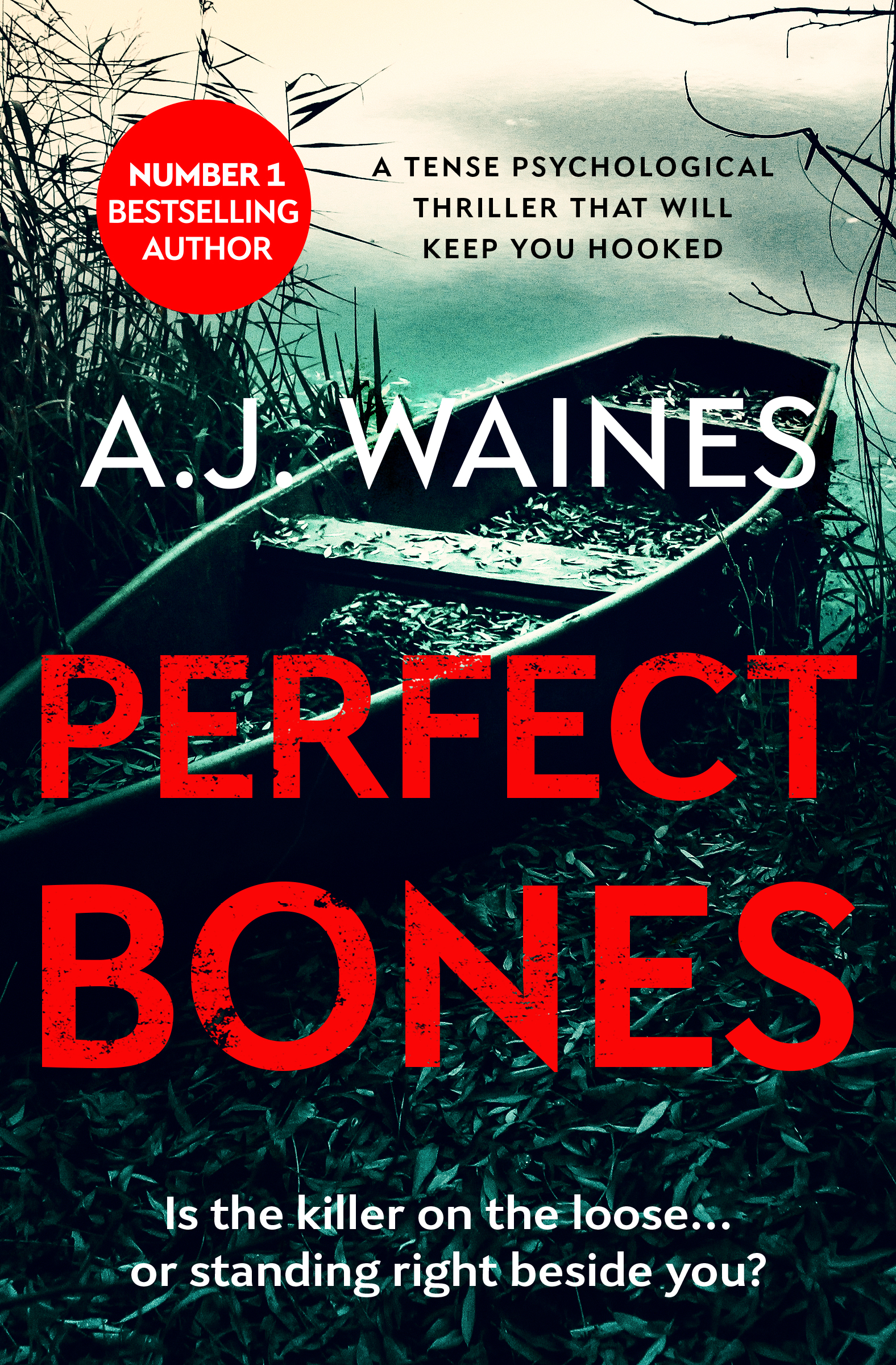
Perfect Bones

In Perfect Bones, the sole witness to a gruesome attack – a teenage artist living on a narrowboat – is traumatised and can't utter a word. That’s when gutsy protagonist, psychologist Samantha Willerby, is given seven days by the police to coax information from him about the killer. When he finally makes a sketch, it's not what anyone expects – but by then another murder has been committed...

One of the techniques I used in the safe-house was art therapy and in the novel this method is used for the mute witness. The reader has to watch and wait for the artist to show what he saw. 
 
I was deeply affected by the individuals I met in the safe-house and still wonder what happened to them and how their lives turned out. Did they re-offend and end up back inside? Did they turn their lives around? As an author, I like to pose the question ‘how would you react in this tricky situation?’ just as, when I think of those women, I wonder how I would have turned out if I’d had their dysfunctional backgrounds, violent environment and deprivation to cope with.

Perfect Bones is available at all Amazon outlets.

This interview was first published on the Crime Readers' Association website.
~~~~~~~~~~~~~~~~~~~~~~~~~~  

Sunday, 22 July 2018

Book Review: The Moment by Douglas Kennedy

The MomentThe Moment by Douglas Kennedy
My rating: 5 of 5 stars

Whilst not a psychological thriller as such, this book contains many 'psychological' themes! Kennedy's books have been described as 'page-turners that make you think' - a fitting tagline in my view.

Swept along by the author's beautiful and fluid language, I was very quickly wrapped up in and mesmerised by the characters and storyline of 'The Moment'. An author, Thomas, receives a surprising package that takes him back to another period in his life. A time when he was on location in Berlin close to ‘the wall’ (mid 1980s), poised to write a non-fiction book about divided Germany. The reader goes back in time with him and follows his daily life as he 'crosses over' - stepping into and back out of the grim existence at that time. On the Western side, we observe him adapting to a quirky bohemian lifestyle, rubbing shoulders with artists and free-thinkers. Then he meets a woman who carries a traumatic and complex history with her.

The book becomes their story and not all is as it seems - an engrossing tale about love, choices, loss and most importantly, the handling of betrayal.

Yes, it probably is a bit too long as noted by other readers. The part where we see a section of the story through the eyes of another narrator, does not add enough in my view, especially as we already know the outcome of events from the first narrator.

Nevertheless, there are twists and unexpected turns in the story and a solid ending. Moments of self-awareness and psychological/philosophical insights sit like little gems within the pages. I have read Douglas Kennedy before and I will be reading more of him.

View all my reviews on Goodreads


Tuesday, 19 August 2014

Suburban, Domestic and Chick-Noir - New Genres in Psychological Thrillers

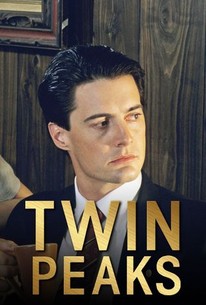
Suburban Noir – the dark side of suburban living - is close to home. It is on our doorstep, the neighbourhood - and breeds threat with themes of secrets, being trapped, being watched/stalked and things not being what they seem - all seen from behind those twitching net curtains. This sub-genre can be traced back as far as David Lynch’s Twin Peaks. Remember that series on television? With the quirky FBI Special Agent, Dale Cooper (Kyle MacLachlan)? This sub-genre also spawns a number of novels about so-called friendships - that best-friend who isn't as loyal as we'd hoped... There is an immediacy about the terror in this sub-genre - we can all relate to suburban noir. The setting isn’t some faraway international cold war spy-ring or trek through the jungles of Brazil. It’s just beyond your washing line. Up-close-and-personal. Scary...
 
Amazon have a category in their bookshelves labelled ‘Crime, Thrillers and Mystery’. It’s a huge area in commercial fiction with no less than 18 sub-categories, including Police Procedurals, Legal and Psychological. In the last few years even more 'sub genres' have been emerging under Psychological Thrillers. Until recently, for example, I’d never heard of the term ‘Suburban Noir’ – but there is also 'Domestic Noir’ and ‘Chick Noir’  – and I thought it might be worth taking a look at this 'new black'.

Domestic Noir
brings the threat even closer. Gone Girl by Gillian Flynn is a good example, where a marriage is the breeding ground for deception and betrayal. A number of books where marriage is centre-stage have been released in the last few years. The Family, too, is a cauldron for crime, bringing with it abductions, incarcerations, issues with infertility, infidelity and missing children. The home is rife with buried family secrets that come back to haunt us. This sub-genre plays on the idea that the home is the safest place to be – OR IS IT..? Novels I've enjoyed in this genre are Until You’re Mine, by Samantha Hayes and Under your Skin (Sabine Durrant) - not forgetting one of my absolute favourites, Into the Darkest Corner by Elizabeth Haynes.

Chick Noir is defined by Lucie Whitehouse, author of Before We Met, as psychological thrillers which explore the fears and anxieties experienced largely by women. In my view, they often share the ‘chatty prose style’ of chick-lit, but with jeopardy and menace added to the mix. Whitehouse says, “They deal in the dark side of relationships, intimate danger, the idea that you can never really know your husband or partner or that your home and relationship is threatened. In these books, danger sleeps next to you. Marriage is catnip for writers of psychological suspense because it's such a private, intimate relationship.” Before we Met starts with what looks on the surface like the perfect marriage – until the husband fails to turn up at the airport… Liane Moriarty's The Husband's Secret also comes into this sub-genre. This concept isn’t necessarily new - there is a tradition of psychological suspense emerging from the domestic arena involving the secrets and fears concealed in marriages and relationships in novels by Patricia Highsmith, Daphne Du Maurier and even Charlotte Bronte.

My current writing is pulling me towards these 'Noir' genres - almost without realising it. My experience in psychotherapy is all about the unspoken horrors lurking behind the bathroom door and I find myself drawn to it... 

So – what’s next in this set of sub-genres?