Showing posts with label murder mystery. Show all posts

Monday, 12 July 2021

Revenge of the TideRevenge of the Tide by Elizabeth Haynes
My rating: 5 of 5 stars

A Full-blown Five stars from me! I love a writing style that's fresh and bright and makes me feel what's happening is 'real', rather than one where it seems the author is trying to make the writing sound original, thereby pulling me away from the immediacy of the action. This story has plenty of energy and drive and plonked me right in the midst of it - sweeping me away into uncertainty and jeopardy.

I loved Into the Darkest Corner by the same author, so I'd highly recommend that book alongside this one. 'Revenge of the Tide' has more atmopshere and colour in the settings (anyone who knows my writing knows I love the otherworldly richness of stories set on canals, lakes and rivers). The dingy night-club contrasts with the open-air homeliness of the canal boat. This book also has less psychological menace, which makes it a Murder Mystery, rather than a Pyschological Thriller. An excellent read.

View all my reviews
~~~~~~~~~~~~~~~~~~~~~~~~~~


Monday, 11 November 2019

Mini Book Review: Tell No One - Harlan Coben

Tell No OneTell No One by Harlan Coben
My rating: 4 of 5 stars

Loved the film (French) when it came out, years ago now - in fact it's up there as one of my all-time favourite films. The premise that someone has been long gone and suddenly seems to re-appear in covert circumstances is SO good! The book is a great page-turning read with Coben's trademark succinct character portraits - giving tiny (often scathing) details which make the players come to life in just a few sentences. There's always a brush of humour there, too - amidst the angst. Reads as an adventure/mystery/thriller. Highly recommended.

View all my reviews
~~~~~~~~~~~~~~~~~~~~~~~~~~

Saturday, 6 July 2019

Why I love writing Psychological Thrillers!


As a child, I devoured the Famous Five mysteries by Enid Blyton and was later drawn to crime thrillers, such as A Simple Plan by Scott Smith and The Day of the Jackal by Frederick Forsyth. Ever since they became recognised as a distinct category, however, I’ve been captivated by psychological thrillers, loving writers such as Minette Walters and Nicci French, from the 1990’s onwards. At the time, I was in awe of all writers and the idea of actually putting together a psychological thriller myself was completely beyond me!

Before I first had a go at writing fiction in 2008, I was a psychotherapist for 15 years. As well as seeing clients with mainstream issues such as low self-esteem, depression and relationship issues, I was privileged to work with ex-convicts from high-security institutions. I found this work fascinating and aside from giving me ideas for novels, it gave me considerable insight into the disturbed and criminal mind.

So, should I try to write murder mysteries or psychological thrillers..? Which would I choose? In the end I didn’t. I put the two genres together.


In my first attempt at a novel, The Evil Beneath, I wanted to create a story that had a distinct mystery on the surface and a deeper psychological thriller lurking underneath. To create dissonance between what the reader ‘knows’ and what the lead character hasn’t yet worked out. I like to find ways to mislead the reader and to create jeopardy from the ‘inside-out’, rather than from the ‘outside-in’. By this I mean that the characters are exposed to danger on a mental level – mind-games and deception – rather than (or as well as!) a physical one.

I’ve written nine psych thrillers to date, with another in the pipeline, and my plots usually centre around the  hidden unreliability or instability of individuals in the story. My protagonists often face a tortuous situation: a missing child, a death made to look like suicide, a stalker, a simple but deadly mistake, for instance. 

In Don’t you Dare, for example, the story starts with a mother misunderstanding a situation involving her daughter and killing someone. This kind of mystery allows the reader to get right inside the minds of key players. It encourages them to try to anticipate how characters might handle certain dilemmas and tempts the reader towards trying to figure out what their true motives are. Not just ‘who dunnit’– but ‘why’ and ‘how dunnit’! It also invites readers to consider: what on earth would I do if I was faced with this situation..?


Most of all, I like the idea of dramatic events happening to ordinary people. A dark and deadly puzzle involving clues where hidden dangers come to light. I love twists and turns and that big OMG moment at the end, of course – that turns everything on its head! In my novel, No Longer Safe, for instance, nothing is as it seems… Many readers told me that when they got to the end of the book, they were so gob-smacked, they had to go back to the beginning to discover how the events turned out as they did! That’s such a great compliment for a writer. I love to knock my readers sideways – and there’s certainly a delicious sting in the tail in that novel!

In all my books I like exploring moral dilemmas and what happens when relationships are blighted by jealousy, secrets, lies or revenge. I like writing ‘domestic noir’ – what could be more scary than thinking you’re safe in your own home and finding that’s where your worst nightmares begin…

My current favourite authors are Belinda Bauer, Claire Kendall,  Lucy Clarke and Sabine Durrant. Brilliant books I’ve read recently are: Until You’re Mine by Samantha Hayes and Tideline by Penny Hancock.


Saturday, 24 November 2018

How Working in a Safe-House helped me write Thrillers

I can honestly say that when it comes to personal experience of the ‘criminal mind’, fact, for me, is just as chilling as fiction. That’s because before I became an author, I'd been a psychotherapist for fifteen years, working from time to time in a safe-house for ex-offenders. The residents were from high-security institutions; women who had served sentences for arson, stabbings, suffocating and all manner of fatal attacks.

So, how has my writing been influenced by working at the safe-house?

Surprisingly, I came away from my encounters with these women feeling more sad, than disturbed. The women had grown up with stabbings, shootings and muggings; they knew no other kind of life. Most had a fragile personality-type, were easily led and got involved with criminal activity because their brothers/sister/mothers lived that life too. Often anti-establishment, they were seeking leadership, gang-culture, excitement and risk-taking. More often than not, they were simply looking for a sense of “family” and belonging.

Since working in the safe-house, I’m inclined to cast women rather than men as the culprits in my books, but they’re never ‘monsters’. While I write about killers and serial killers, they aren’t thugs or callous maniacs. There’s very little violence and gore in my books and far more about harrowing mind-games and dark, driven motives behind the radical acts involved. I’m also fascinated by the differences between law-abiding citizens and those who cross the line into serious crime. I love writing about characters' inner struggle for revenge, their tortured reasons for keeping secrets and telling lies! As a result of all this, I hope my books show a good degree of humanity.

How ‘safe’ was it?

The ‘safe-house’ wasn’t necessarily safe for everyone. During one of my visits, a woman set fire to her room and others self-harmed, as cooking knives and personal property was available as part of the rehabilitation process. Most residents were on antipsychotic medication or drugs for anxiety or depression, so mood-swings was an issue.

The location and confidentiality was very strict, as you can imagine – a place for the women to re-adjust to the idea of integrating back into society. I was there to offer a listening ear for personal problems and fears of going back ‘outside’. Spending time in that volatile setting was tough, but it gave me lots of raw material to slip into my novels!  
 
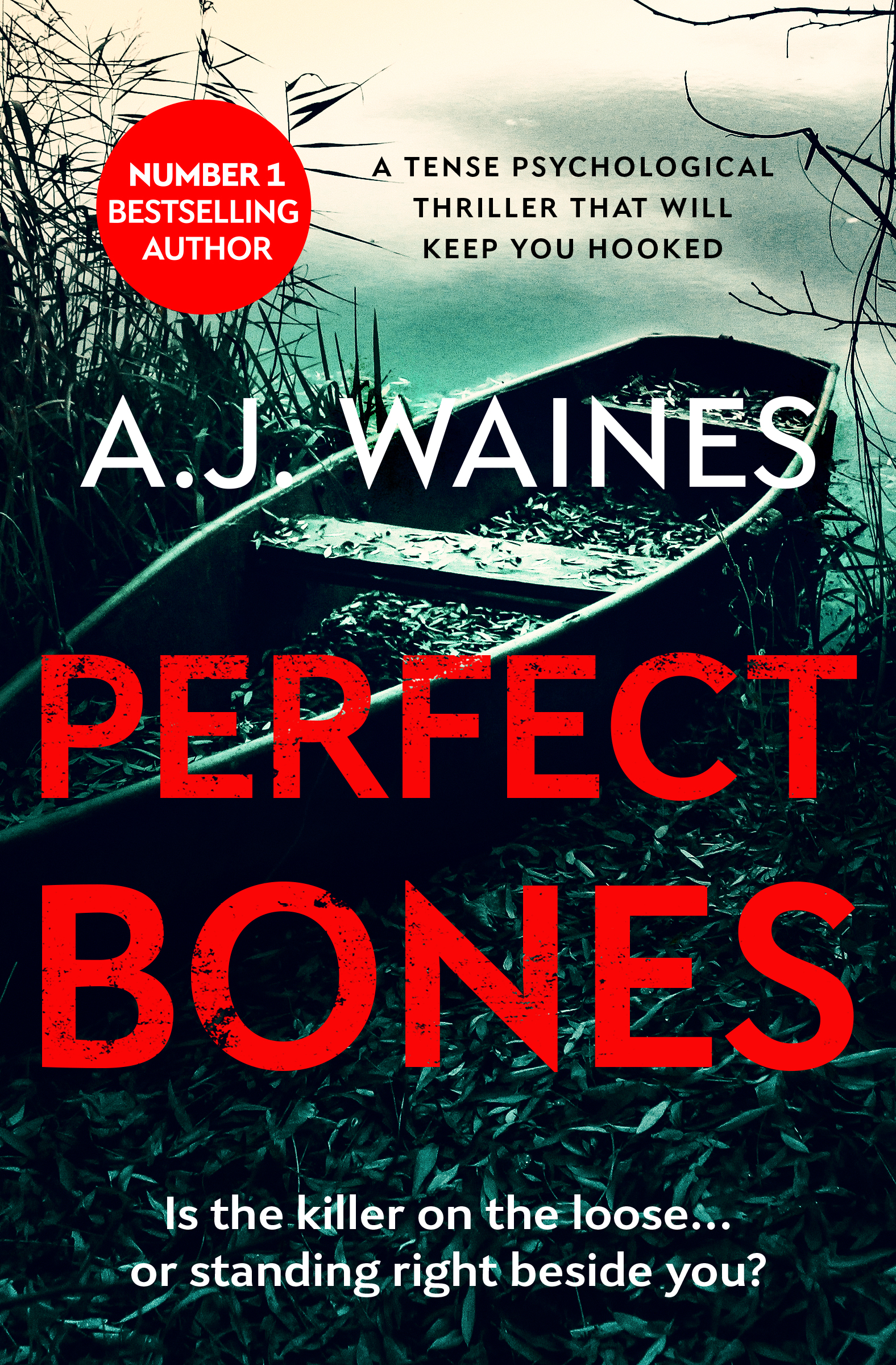
Perfect Bones

In Perfect Bones, the sole witness to a gruesome attack – a teenage artist living on a narrowboat – is traumatised and can't utter a word. That’s when gutsy protagonist, psychologist Samantha Willerby, is given seven days by the police to coax information from him about the killer. When he finally makes a sketch, it's not what anyone expects – but by then another murder has been committed...

One of the techniques I used in the safe-house was art therapy and in the novel this method is used for the mute witness. The reader has to watch and wait for the artist to show what he saw. 
 
I was deeply affected by the individuals I met in the safe-house and still wonder what happened to them and how their lives turned out. Did they re-offend and end up back inside? Did they turn their lives around? As an author, I like to pose the question ‘how would you react in this tricky situation?’ just as, when I think of those women, I wonder how I would have turned out if I’d had their dysfunctional backgrounds, violent environment and deprivation to cope with.

Perfect Bones is available at all Amazon outlets.

This interview was first published on the Crime Readers' Association website.
~~~~~~~~~~~~~~~~~~~~~~~~~~